
On 24 September 2026, PEGAInnovate Paris brought together Pega executives, clients and partners at 28 George V. One message dominated: agentic AI only creates value if it delivers predictable, governed results.
As a Pega integrator and Silver sponsor of the event, IRIZ Consulting was there. Here is our expert take: what is changing technically, and how we put it into practice for our clients.
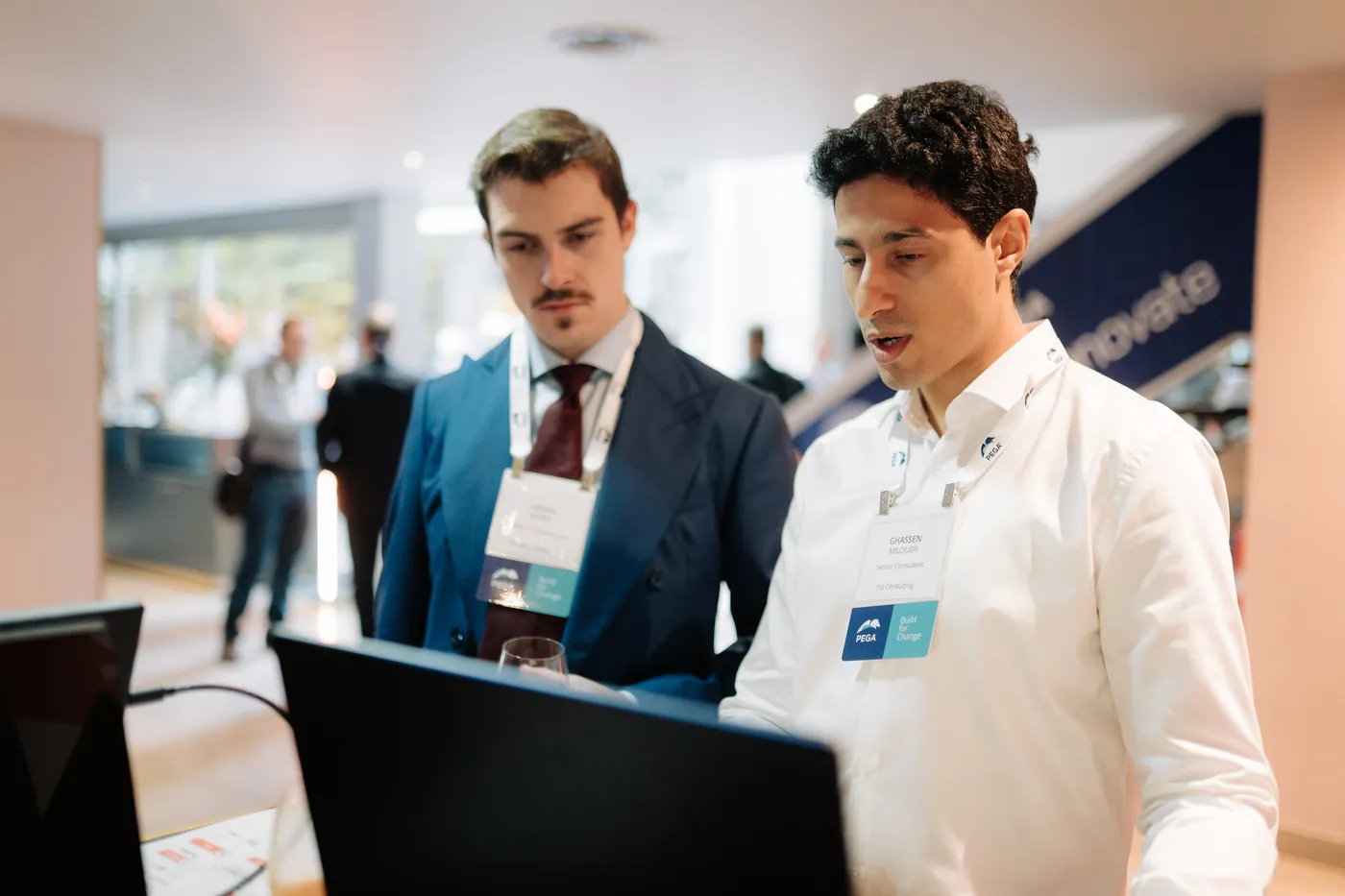
Keynote: Design, Build, Run, the agentic lifecycle of Pega Infinity 26
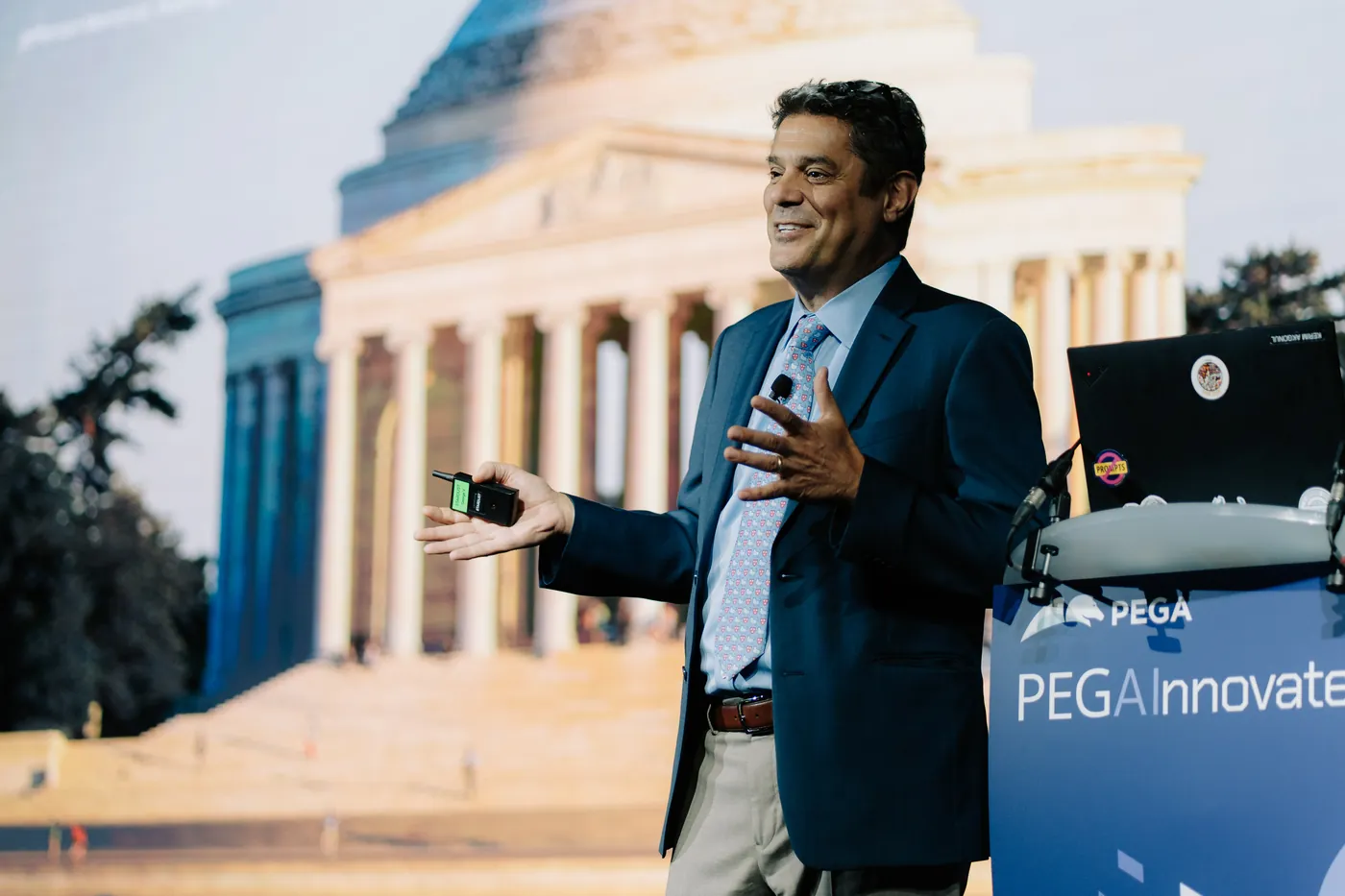
Kerim Akgonul, Chief Product Officer at Pega, presented an end-to-end, AI-powered toolchain. It is exactly the chain we run on our projects:
- Design with Pega Blueprint: generating a target application (case types, stages, data model, personas) from the business need, exportable directly to Infinity.
- Build with Infinity Studio: assembling and evolving the application with an AI assistant built into the low-code environment, with no gap between design and delivery.
- Run with agentic workflows: LLM agents executed inside governed case types. The demo, an emergency mortgage relief programme, chained intake, eligibility, recommendation, risk and compliance checks, then resolution.
Our framework: who does what in an agentic workflow
The principle behind “Predictable AI” is a strict separation of responsibilities. This is the framework we apply when designing architectures:
| Step | Agent / LLM | Pega workflow | Human |
|---|---|---|---|
| Understand the request | Interpret intent | Authenticate, route | Resolve ambiguity |
| Process documents | Extract, summarise | Validate, keep the source | Review sensitive data |
| Apply policy | Search, explain | Rules, approval flows | Handle exceptions |
| Finalise | Draft, recommend | Act, trace, notify | Authorise and own the risk |
The architecture stays open on the model side: Mistral, OpenAI, Gemini, Claude or a proprietary LLM, orchestrated by Pega. On results, Pega cited a US bank that cut its average complaint handling time from 40 days to 2 days.
Groupama: Pega at the scale of a group with 12.5 million customers
The testimony of Halim Yahia, transformation programme director, demonstrates the platform’s ability to perform at national scale:
Our technical takeaway: 11 regional entities process 24,000 tasks a day thanks to a dynamic to-do list. The queue is no longer sorted by age but by multi-criteria prioritisation based on a single customer view, typically driven by Pega’s decision rules and intelligent routing. Another key point: 14 million interactions captured in the first half of 2026 are now observable and analysable.
Groupama also uses Blueprint in bootcamp mode: the target application is generated from the very first business workshop, then feeds the backlog directly.
LCL: Blueprint halves the scoping phase
On Maestro, LCL’s back-office transformation programme presented with Capgemini, scoping a use case now takes 2 workshops instead of 4 on average with Blueprint. The approach combines Sprint 0, Blueprint and BPMN modelling, and AI-assisted reverse engineering of the legacy system before decommissioning.
We share this conviction: the gain from Blueprint shows downstream. A target validated by the business at the scoping stage means fewer back-and-forths in testing and fewer incidents in production.
AI governance: the real barrier to scaling
Only 26% of organisations believe they use AI effectively (AWS / HBR Analytic Services, March 2026). The main barriers cited: lack of a clear agentic AI strategy (46%), infrastructure and integration with existing systems (35% each), and lack of governance (35%).
AWS and Pega recommend three actions, which we build into our scoping phases from day one:
- Define your risk appetite: which decisions the agent can take on its own, and which require approval.
- Make agents visible: every action traced in the case, with an audit trail compliance teams can use.
- Start with a measurable use case before industrialising.
On the infrastructure side, the Pega + AWS alliance relies on Amazon Bedrock for Predictable AI, Amazon Connect for agentic self-service, and AWS Transform with Blueprint to modernise legacy systems.
Our analysis: move fast without losing control
Karim Zein, VP Client Growth at Pega, summed it up in his closing remarks: agentic AI is a board-level priority, but the market is full of shortcuts (vibe coding, one-prompt agents, uncontrolled token costs). Our field experience confirms three rules:
- Scope with Blueprint: the target application is set in days, not weeks, and the backlog follows directly.
- Encapsulate every agent in a case type: rules, SLAs, human approvals and audit trail remain carried by the workflow.
- Govern from the first use case: risk appetite, choice of LLM, monitoring of consumption and performance in production.
It is this combination, Pega Infinity expertise, Blueprint mastery and governed agentic architecture, that we bring to our clients.
FAQ
What is Pega Blueprint?
An AI-assisted design tool that generates case types, stages and data model from the business need. At LCL, it halves the number of scoping workshops.
What is Pega’s Predictable AI?
LLM agents executed within governed workflows, with human approval on high-impact decisions.
Can you use your own LLM with Pega?
Yes: Mistral, OpenAI, Gemini, Claude or a proprietary model.
Launch your agentic project with IRIZ Consulting
First agentic use case, Blueprint workshop, legacy modernisation to Pega Infinity 26: our certified Pega consultants and architects support you from scoping to production.
Request a Blueprint scoping workshop →Sources
- PEGAInnovate Paris 2026, official Pega page
- Presentations shown during the event (Pega, Groupama, Capgemini, AWS)
- AWS / HBR Analytic Services study, “Agentic AI: Expectations, Readiness, and Results”, 2026